
~Winston Churchill
The best argument against democracy is a five-minute conversation with the average voter."
Democracy without voting?
What if we could start over and create a different method of choosing our government representatives? If you were given the task, how would you reorganize our method of choosing someone to represent you in government? You would probably come up with a number of suggestions on how to improve the current system. Considerations might include choosing candidates with integrity and honesty. Maybe someone who is hard-working and has the community's best interests in mind? Does this sound like the candidates we choose from on election day with our current voting system?

There is a better way. The Athenian Greeks, who invented democracy, used a method called sortition, effectively choosing members of governing bodies randomly. Although this may sound shocking at first, consider that this is exactly what we do today for very important matters - like deciding the guilt or innocence of a person charged with a serious crime, even murder.
Today's democracies are perverted, misaligned, and corrupted. Most would be better described as either an Autocracy, Oligarchy or Kleptocracy. And nation-states that are classified as Democracies are in serious decline - and have been since the early 1990's. In fact, since about 1992, each of the trend lines on the graph below is moving in the wrong direction. As AI-assisted "deep fake" videos of politicians running for office, appearing to say things they did not say, and other disinformation techniques are perfected, we will no longer be able to easily determine what is real, and what is not. Large parts of the electorate may be easily misled into voting for a candidate who was misrepresented online by such techniques.

~Wikipedia
A Better Democracy
We invented Democracy. Then, we added elections and voting. That isn’t working anymore. It’s time to reinvent.
At World United, we have taken the sortition process a step further, adding an element of choice whereby citizens nominate people who are eminently qualified for the job. So first, we choose citizens at random, and then those citizens nominate qualified candidates. The random level ensures there are no concerns of nepotism, favoritism, partisanism, or worse. The nomination level ensures that we get qualified individuals to represent us. We call the system Sortation - a portmanteau of “sortition” and “nomination.”
A Citizens' Assembly
An encouraging sign is the use of citizens' assemblies around the world. A citizens' assembly is a group of people selected by lottery (sortition) from the general population to deliberate on important public questions and provide a set of recommendations, options, or a collective decision to the convening body.
A citizens' assembly uses elements of a jury to create public policy. Its members form a representative cross-section of the public and are provided with time, resources, and a broad range of viewpoints to learn deeply about an issue. Through skilled facilitation, the assembly members weigh trade-offs and work to find common ground on a shared set of recommendations. Citizens' assemblies can be more representative and deliberative than public engagement, polls, legislatures, or ballot initiatives. They seek quality of participation over quantity. The OECD documented almost 300 examples (1986-2019) and finds their use increasing since 2010.
A government established using sortation would naturally make extensive use of citizens' assemblies.
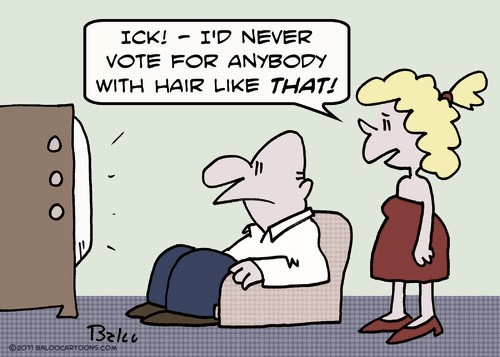
Does voting even work the way we intended?
How Sortation Works
First, a small percentage of the population in question, let’s say for a particular riding, for example, would be chosen at random and given the task of nominating five individuals. Their instructions would be to choose individuals they believe might be best suited to represent them in the riding. In one example, a riding of 100,000 people might have 1,000 randomly chosen individuals who would then choose up to five people to nominate, ranked first choice, second, etc. Now that we have up to 5,000 names, many of which will be duplicates, we employ a point system based on their ranking and number of nominations. A “winner” would be chosen to represent the riding. That chosen individual may very well be the absolute best choice among all the citizens of that riding. Not the best person among the very few who decided to go into politics. Not the one who subsequently got the most votes. The absolute best choice considering everyone in that riding. That individual would be approached and offered the position. As will likely often be the case, a particular individual may not be in a position to, or simply not want to, accept the position. Next, we move down the list to the next most qualified person, and so on, until someone accepts the position. See the illustration below.
There are a myriad of benefits to sortation over our current electoral systems:
- Money in politics may be the biggest problem we have with democracy today. In the sortation system, there are no campaign contributions, no candidates, no parties - no effective place to spend money.
- Getting qualified individuals to run for office is a major challenge, given the brutal and demeaning process of becoming an elected official. Negative ad campaigns and attempts to dig up dirt on individuals, or even their families, are commonplace. Sortation solves this problem elegantly by eliminating elections altogether, opening the door for more qualified people to consider an appointment (if offered).
- Using the electoral system, our choices for a member to represent our riding is often only two or three individuals. With sortation, we are literally considering almost everyone residing in the riding as a potential representative. And studies have shown that people who run for election are higher than average on the narcissism and sociopathic scale.
- The guided nomination system of sortation will create a list of nominees with positive attributes, such as honesty, integrity, leadership skills, etc.
- Political parties often create sharp divisions and animosity between members who ought to be working together for the common good. In a sortation system, there are no parties and, therefore, less division, creating a more united environment to do what is best for the community.
- Politicians often make decisions and spend significant time and resources on getting re-elected while in office - at the expense of working on the tasks for which they were elected. Sortation solves this problem, as there are no elections.
- It is also a well-known fact that name recognition plays a role in election outcomes, placing celebrities in power and creating family dynasties. Once again, without elections, this problem is significantly reduced.
- Long-term planning. Elections and campaigning create a constant cycle of short-term planning and thinking that is not in society's best interests. We need 50 and 100-year visions and plans in addition to shorter-term goals. Our current systems discourage visionary thinking and thoughtful planning for the future.
- Misinformation, disinformation, deep-fake videos, and other intentional attempts to fool the electorate into voting for a particular candidate would be much more difficult under Sortation as the random selection nature of the system means that there are no candidates, no parties, and no elections with which to tamper.
As the Sortation system has never been put to the test as far as we know, there may be some drawbacks that we are not aware of. But given the obvious, numerous benefits over the electoral system, they could not possibly outweigh its positive attributes.
The Sortation system would be used to establish the world parliamentary system.
We would encourage nation-states and governments of all levels to consider this system for themselves. It is clearly a better way to establish democratic government bodies.
Resources:
TED Talk:
Sortition Foundation:
website: sortitionfoundation.org
Here is a simplified illustration of how sortation works.
The numbers would be much larger in practice. The bottom row represents the randomly selected citizens. The next row up represents the citizens nominated for office by the randomly chosen citizens. In this illustration, the office (of member of parliament, for example) would be offered to the citizen with the most nominations first. If that citizen is unwilling or unable to accept the position, the citizen with the next highest number of nominations would be offered the position, and so, until the position is filled.

In practice, the nominations would also be ranked so that the position would be offered to the citizen with the most 'points' - which would be based on the number of nominations + points for the ranking of each nomination. Let's say we award 5 points just for being nominated and another 5 points for being ranked #1 in the nomination, 4 points for being nominated 2nd ranking, 3 for being ranked 3rd, 2 for being ranked 4th and 1 for being ranked 5th. So, for example, if we give 5 points for being nominated and 5 points for being ranked in 1st place, then that nomination would be worth 10 points. Another nomination where the ranking was 5th would receive 5 points for the nomination and 1 point for the ranking of 5th, for a total of 6 points. So, one person who might receive 15 nominations of lower rankings could lose to another who received only 11 nominations, if each was ranked #1.
Click here to see how Sortation might work in CANADA
The world hates change, yet it is the only thing that has brought progress."~Charles Kettering
We are going to need everyone. please join now.